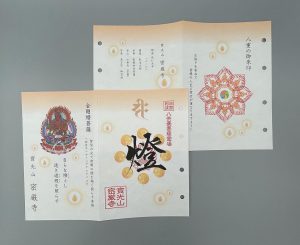
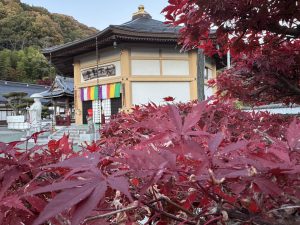
Hōkōzan Mitsugon-ji Temple
Sect: Omuro School of Shingon Buddhism
Principal Image: Sacred Avalokiteśvara (Shō Kannon Bosatsu)
Mantra: On Arorikya Sowaka
Founder: Kōbō Daishi
Established: First year of the Kōnin era (810)
Mitsugon-ji was founded in the first year of the Kōnin era (810), during the reign of Emperor Saga, the 52nd emperor of Japan, by Kōbō Daishi. According to tradition, within the Awa–Sanuki border region, three temples—Chūren-ji and Mitsugon-ji among them—were each miraculously erected in a single night, embodying the principles of oneness of essence, form, and self.
The principal image of the temple is Shō Kannon Bosatsu, and the accompanying image of Fudō Myōō is revered as a carving made by Kōbō Daishi himself, said to have been engraved with his fingernails.
Mitsugon-ji was also renowned as the prayer temple of the Ōnishi clan, lords of Shiraji and Ōnishi Castle. The temple’s Daihannya Sutra was donated by Ōnishi Kakuyō, the castle lord.
However, due to warfare brought about by the armies of Chōsokabe, the Main Hall, abbot’s quarters, treasure hall, and other buildings were completely destroyed by fire. Thereafter, Gon-Daisōzu Shinkai Shōnin vowed to restore the temple and successfully rebuilt it. Since that time, the flame of the Dharma has been continuously preserved, and prayers have been offered for the peace and well-being of all realms and beings, a tradition that continues to this day.
Mitsugon-ji serves as a designated temple of the following pilgrimage routes:
Shikoku Thirty-Six Fudō Sacred Sites (No. 5)
Awa Saigoku Thirty-Three Kannon Sacred Sites (No. 22)
Mitsugon-ji Official Website:
http://mitsugonji.or.jp/